Jackson was my best friend. He was a senior, a year older than me, and was our school’s star cornerback, and was expected to be in the NFL in a few short years. He was very athletic, standing at 6’4 and weighing 190 pounds of pure muscle, he was the definition of a tank. Most people didn’t know him like I did. He was a great friend to me, and was my way of escaping any situations at home. He always knew how to make someone laugh, and was extremely selfless; the kind of guy who would fall on a blade for you, actually no, that’s way too soon. He had Blonde hair that he left messy, and had sharp blue eyes, the kind that could send shivers down your spine with just a glance. He was powerful, the kind of person that everyone would gravitate towards in a room. He had it all. He was also extremely humble, which is a work of God seeing how much talent he had, and how lucky he was when he was dealt his cards, but he never held something over anyone, which resulted in him having many friends, and helped to keep me grounded. I never understood how he did it, but he did. He was like a brother to me.
23 Lost Thing New Story Exposition
The story will follows an orphaned boy, around 12 years old, in the early 1900s in London. He has never felt truly at home anywhere, and feels lost everywhere he goes.
Rising Action: A boy, stowing away on a train, suddenly gets discovered by a conductor, walking to the back of the train. The man chases the boy for a few minutes, until he is able to escape the train at a stop.
Rising Action: He finds a broken wrist watch, lying on the street, and takes it. He takes it down an alleyway to try and fix it, and after spending quite some time, finally gets the watch working again.
Rising Action: A man comes running down the alleyway, demanding the little boys gives him back his lost watch. The boy, who gets cornered, hands over the watch.
Climax: The man takes his watch back, noticing that it is currently ticking away. The man asks the boy where he learned to fix these, and it is revealed that he is a tinkerer, who tries to fix things such as watches, and has been working for weeks to fix it. The man ends up taking the boy home with him, to help him get off the streets, and to teach him how to fix things, and to learn from the boy.
Resolution: 10 years in the future, the boy still lives with the tinkerer, learning the craft from the great man, and finally feels at home.
22 The Lost Thing Analysis
The Lost Thing is a short story written by Shaun Tan in 2000, that was adapted into a short movie. The Lost Thing is about a teenage boy who finds a lost thing on the beach, and after playing with it for a while, he grows somewhat attached to the lost thing.
The first rising action is the boy playing with the lost thing. This is important to the story, as this sets up their relationship, and helps the reader to sympathize with the lost thing. (2:50-3:30).
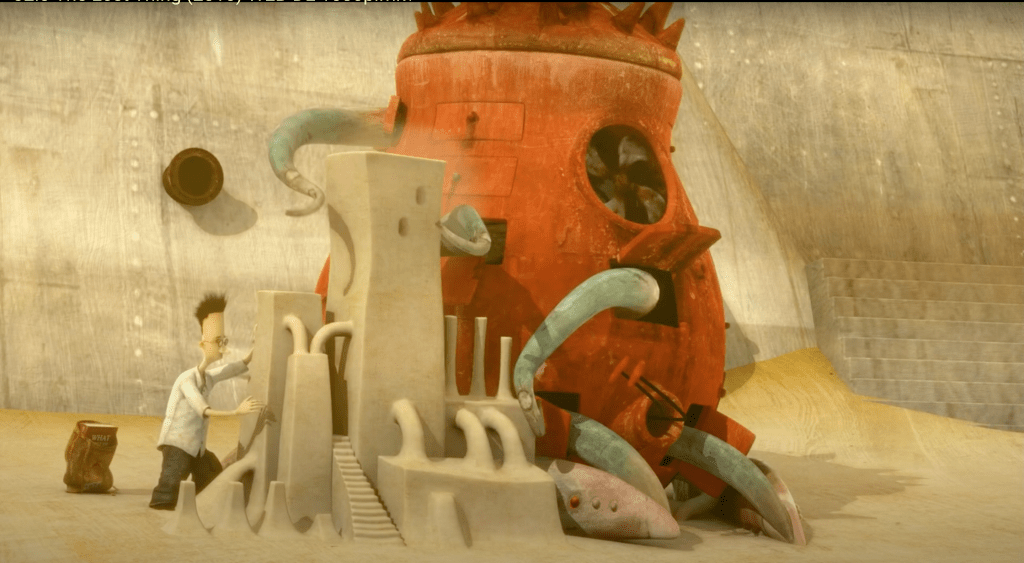
The next rising action is the boy walking around, trying to find someone who knows where the lost thing belongs. This is important to the plot, as it helps to alienate the lost thing, as no one even knows that it was missing, and no one knows where it is from, where it belongs, and who it belongs too. (3:50-4:17)
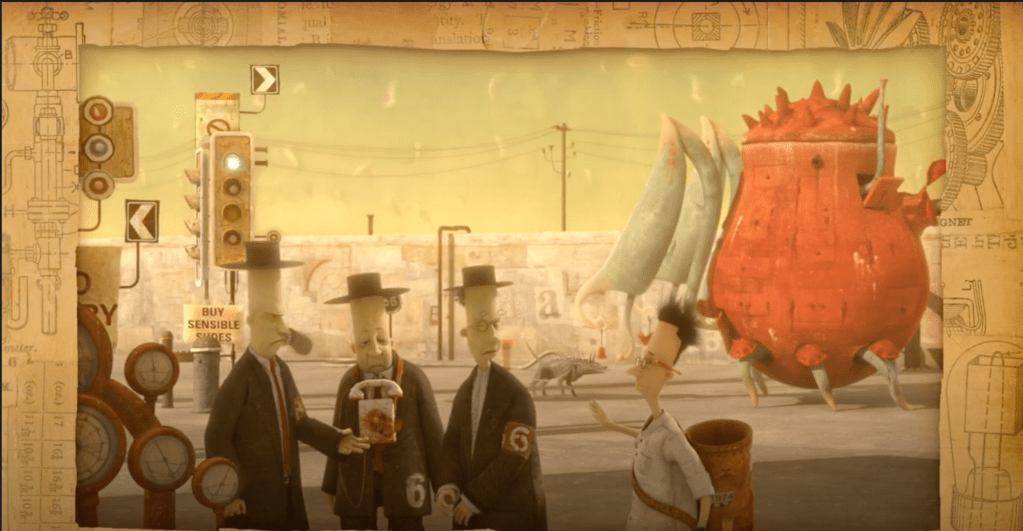
The next rising action is when the boy takes the thing to his friend, Pete, and to his parents, and then brings the lost thing back into the shed. This makes it seem that the only person who really cares about the lost thing is the boy himself. (4:24-7:15)
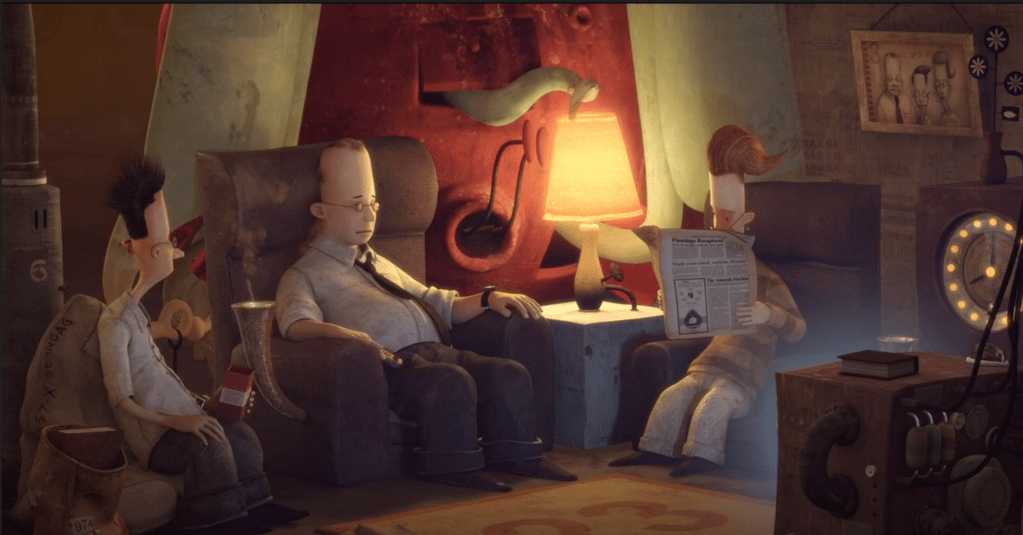
The next rising action is When he sees the advertisement on tv of a place to bring lost things. This is important for the plot, as it gives them a solution, and helps lead to a conflict later on in the story. (7:35-8:00)
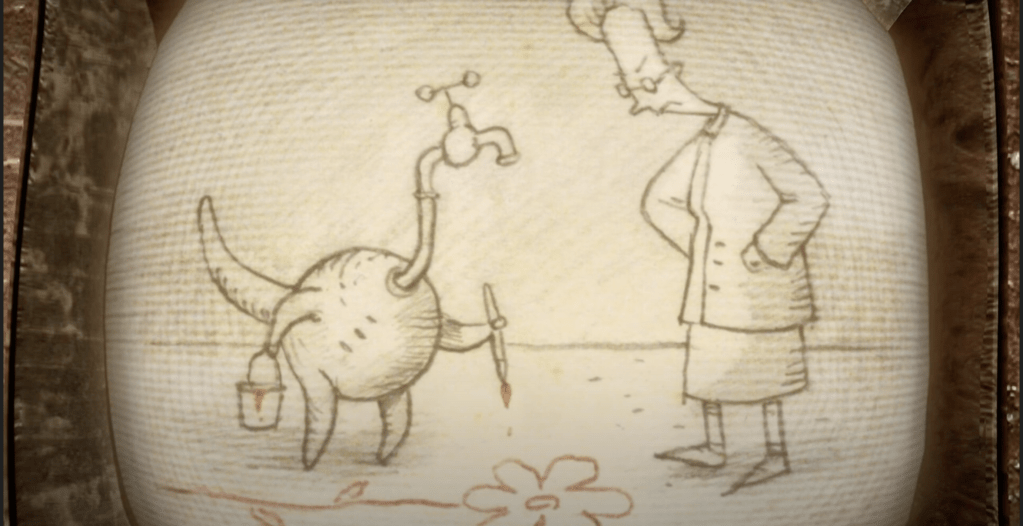
The final rising action is when the person at the place for lost things tells him of a better place to bring the lost thing. This introduces a major conflict for the boy about where he should leave the lost thing. (9:45-10:05)
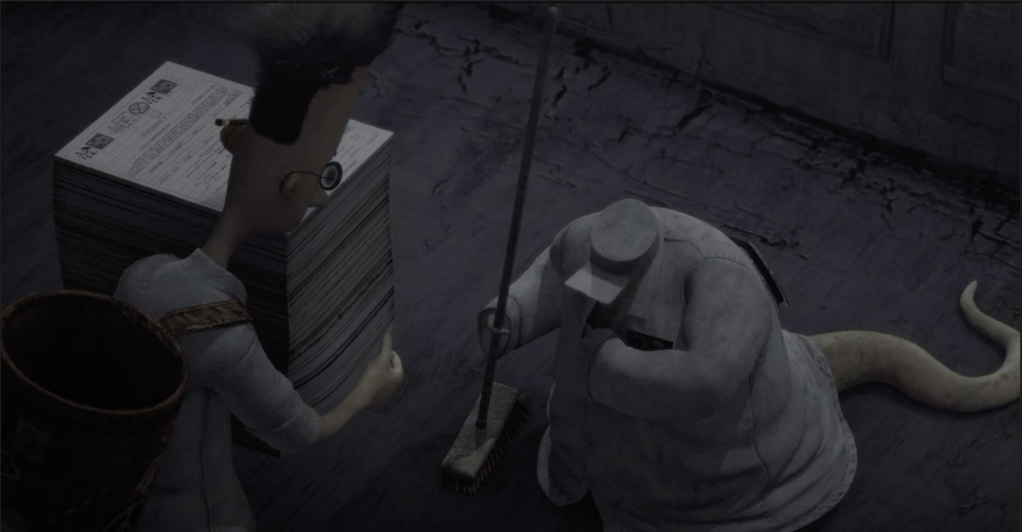
The Climax of this story is when they arrive at the new place for the lost things. This is the climax because this is the most emotional scene in the film, as well as when the problem of where does this thing belong is solved. (12:08-14:18)
The resolution of this story is when he talks about how he thinks about the lost thing from time to time, whenever he sees something that seems out of place. This gives a sense of closure to the story. (14:29-15:00)
The message of the story is that everything belongs somewhere, and that everything has a home. Throughout the story, the boy is trying to find a home for the lost thing, and ends up finding a place full of lost things, meaning they all have found a home there.
21 Producing Literary Text: Descriptive Writing (picture response)

The hot sun beaming down, glistening off the morning dew, covering the small cracks between the uneven stairs. The fresh scent of mildew rushing into your nose like rain to the ground. The distinct sound of people panting, out of breath, after climbing the thousands of stairs, as if there is no end. The ruins feel calm. Shades of blue, brown, and green all blending together to create a beautiful tapestry. The bricks look smooth, having been worn away by centuries of rain, wind, and people, constantly climbing and descending, yet still rough, the edges sharp enough to cut through wood like a saw. The walls resemble a puzzle, random gaps, waiting to be filled in by the correct piece; but unbeknownst to the wall, the pieces have been buried below tonnes of dirt, lost forever. As you reach the top of the stairs, your feeling of triumph is quickly replaced by a feeling of awe. The view is spectacular, almost like you can see the whole world around you. The view is pure beauty. The surrounding area seems untouched, lush forests, and a river, winding its way through it all. It feels like a time machine, taking you back to a time before man, and you can feel all of your problems start to drift away. You could spend an eternity just standing there, trying to take it all in, and still fall short. No camera could ever do it justice. All you can smell is the scent of freshness, the crisp cold air nipping at the tip of your nose, and surrounding your ears. The sounds of birds chirping creates a beautiful harmony. The time has come. You must return to the normal world. The journey down seems much shorter, and you feel like you have been put under a spell, all you can imagine is the top, and that, much like the wall, starts to fade away piece by piece. You finally reach the ground, but feel like you’re floating, trying to hold onto the magic you felt just a few short minutes ago.
Photo Credit: https://www.chasingtheunexpected.com/photo-essay-lebanons-ancient-ruins-evoking-memories-from-past-lives/
20 Bedroom Description
Situated in the back corner of the house, tucked away down many series of hallways, my room waits to be discovered. A big rectangular room. My room is filled with dark furnitures, browns and blacks, like all the life has been drained from them. The walls and the floor contrast the furniture like stripes on a zebra, all light shades of beige. My room is quiet. The occasional sound of a door closing, or the wind rustling through the leaves through the open window, looking out over the backyard, enclosed by shrubbery. The room feels alive, random objects thrown around to all corners, my desk covered with notebooks of many colors, papers, and pens. My room has an interesting scent, a combination of wood, paper, and fabric softener. A pile of clean clothes here. Bags thrown there. Upon entering my room, it will appear like a mess, but I classify it as an organized mess. I can tell you where everything is, and every pile is put somewhere so that if I need it, it will be right there for me to grab. And then there is the piece de resistance, memorabilia, baseball memorabilia everywhere. My room, head to toe, is covered in trophies, plaques, and souvenirs from watching, and playing baseball. It looks like someone took a normal room, and went over it with a baseball paint, wall to wall, floor to ceiling. My room is comfortable. It feels like an extension of my own body, an extra limb. My room is warm, right around body temperature, and the occasional sunlight from the window illuminates the whole room.
19 Around the World in 80 Days Comparison
Michael Palin is a famous comedic actor, and has travelled the world repeatedly, each time with a different path and purpose. I will be looking at a scene and the accompanying entry from his travel diary of Around the World in 80 Days. The scene I will be specifically focusing on is the scene where he attends a football match in Cairo, and will be talking about how the different mediums show different fan environments.
In the film, the fans come across as very enthusiastic and …. This is done by using lots of shots where you can see many fans all at once, but not showing the game. This means that they can be cheering for something that you cannot see. In addition, in most of the shots, Michael Palin looks more relaxed than the rest of the fans, which also makes the rest of the crowd seem riled up.

As you can see in the image above, the spectators all seem to be very riled up, while Michael Palin looks more calm, and you cannot see the play going on, meaning you have no idea what they are cheering for, and it might just be a normal play.
The book chose to describe the fans as much more violent towards the game. In the text, in the third paragraph, it writes about how riot police had arrived for the end of the game, and were surrounding the pitch. This leads the reader to believe that the fans might attack the players, as well as the referees if the game does not result in a home team win.
While each medium chose to show the general environment in the stadium, both of them chose to highlight one key element that the fans were welcoming to Palin. Both the scene and the text chose to talk about how Palin was cheering for the wrong team, and the fans, instead of being hostile towards him, helped point out which team was which.
18 Film and Text Comparison
There are many different ways to learn about different countries, as well as the different cultural things to experience while visiting. Between late-night talk show host’s creating funny and entertaining episodes where he explores different countries, to websites dedicated to writing articles about different things to experience and explore.
The show Conan Without Borders features the late-night show host Conan O’Brien as he tours different countries, and I will be talking about his first episode, where he visits Havana, Cuba. I will be comparing it to an article written by Cassandra Brooklyn, a journalist for the Lonely Planet about women in Cuba quitting their jobs to become artists.
There are many similarities between the text and the show. For example, both of them chose to showcase some of the art in Cuba. In the text, there are two images, one featuring Callejon de Hamel, an alley famous for its street art, and an image of a woman making an event program from hand. Both of these show the Cuban culture and the different arts that come from the country. In the show, many of the things Conan learns about are Cuban forms of art, between learning to Salsa, the Rumba, and how to play Salsa music. While this shows off different types of art, they both do showcase them, and help the audience to learn about the art in Cuba.
While there are similarities, there are also quite a few differences. One difference between the two is the seriousness of the final product. The writing is serious and goes into great detail about why women are switching careers. One example of this is in the second paragraph, where it says “…with the state salaries hovering around$25/month, private sector jobs are becoming increasingly appealing. In contrast, the show is more light-hearted and made for the audience to laugh. For example, in the scene where Conan learns to dance the Salsa (22:30-26:50), they constantly showcase how bad he is at dancing to make it funnier and more enjoyable, as well as fill the scene with jokes.
Both of these styles get across the desired information, and both follow some similar topics, but both of them have different characteristics, making some more enjoyable than others.
17 Conan Without Borders Scene Analysis
The show Conan Without Borders features Conan O’Brien, a famous night show host, as he travels the worlds, and learns about other cultures. This scene shows Conan O’Brien taking a tour of a rum factory in
Cuba, during the first episode of Conan Without Borders. The purpose of this scene was both to entertain the audience with Conan’s quick quips and sarcastic comments, as well as to educate people about the Cuban rum-making process. To make the scene funnier, the editors and cameraman use different techniques to make the show funnier, as well as trick the brain into finding it funnier.
Audio
Audio is used very rarely, and there are only a few instants where they add audio to the episode. Most of the audio that is added is laughing tracks. These are used to subconsciously trick the brain into finding the jokes funnier than they are.
Dialogue
The dialogue between Conan and Gretel, the tour guide, is a mixture of humor and jokes, as well as an informative speech about the rum and the process of making it. They also will follow every bit of information up with a joke, to keep the audience interested.
Camera Angle
The camera angle is another technique that is used to make the content funnier. One way of doing this is by changing the camera angle for different purposes. For example, most of the informative speech uses a composition with Conan is on one side of the screen, and Gretel is on the opposite side, commonly with a medium shot. This can be seen here when Gretel is explaining where the rum comes from, specifically the plant used.
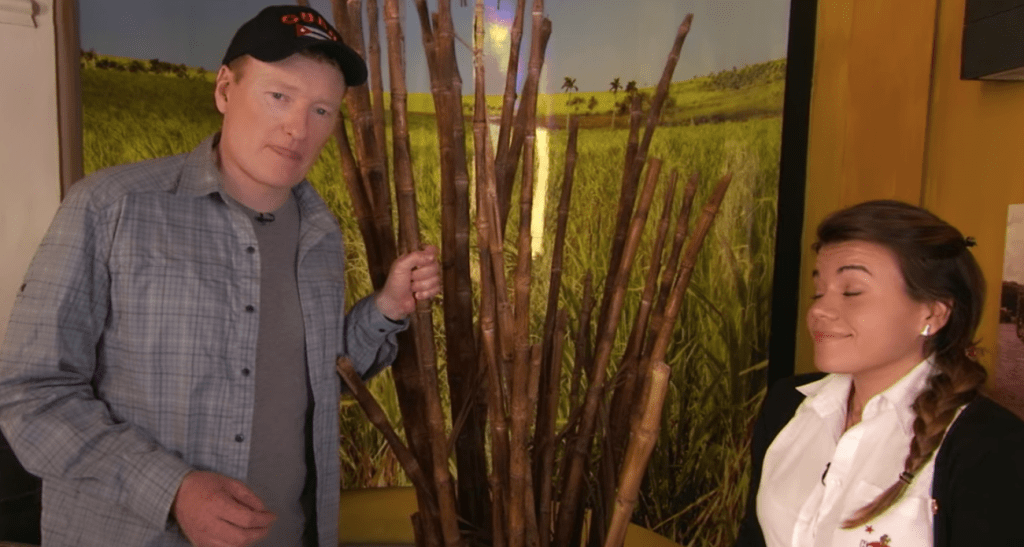
As you can see, Gretel is on the far right of the screen, while Conan is situated on the far left, with the sugar cane in between them. This is different than when Conan goes to tell a joke, as the shot then switches to a close up of either Gretel or Conan himself, trying to play the joke off with their reaction.
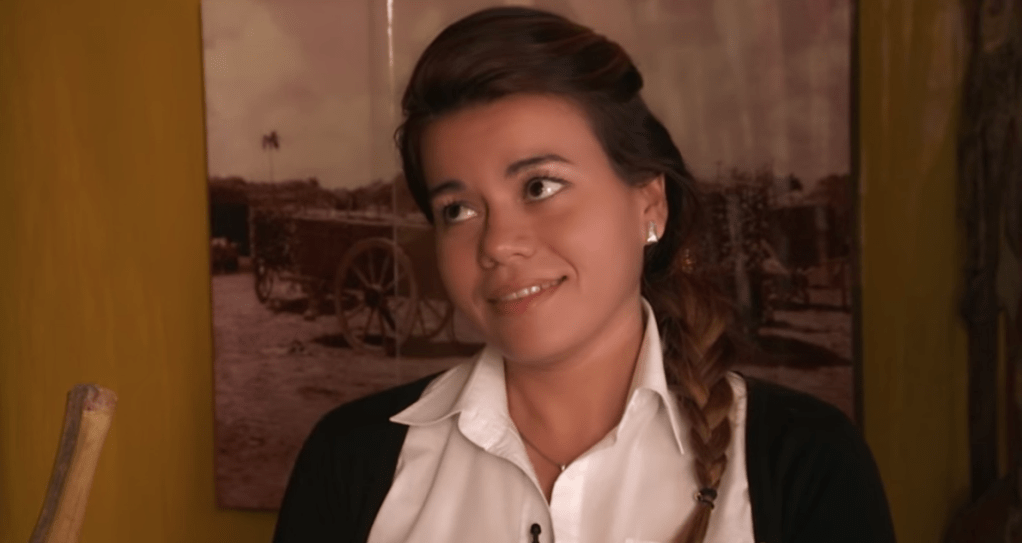
This helps to associate our brains with different shots resulting in either a joke or more information. All of these tricks, combined, are used to make the program enjoyable, and to help us relax and laugh during the program.
16 Difference Between Neighbors
Throughout my childhood, I have moved quite a lot, and it has definitely changed the ways that I look at the world. I was born in the United States, and spent most of my life there and moved to Canada Around 5 years ago. While there are many similarities between the two countries, not many people are aware of some of the differences there.
Some of the things that struck me right away were the fact that, instead of having gallons of milk in bottles, you would get your milk in a plastic bag, and had a special pitcher to put your milk bag in when you were using this. Another difference was Thanksgiving. While most of the traditions on Thanksgiving were the same, eating a turkey and gathering with friends and families, Canada celebrates Thanksgiving in the middle of October, before Halloween. This eliminates one of my favorite Thanksgiving traditions from the United States, the football games.
I remember one year in the United States, on Thanksgiving morning a bunch of my friends and their families all got together and had a big touch football game. It had snowed the night before, and the field was absolutely covered by it. After we played for a while, one of my friend’s mom came with her car and a couple of boxes of hot chocolate, and we spent a long time running around and goofing off while we warmed up.
Not only the culture but the education was different there as well. Coming from the United States, we always were taught that we were the victors in the war of 1812, but living in Canada, they taught that either the British won the war, or it ended in a tie, depending on who you asked. Also, from the very beginning of kindergarten and elementary school, you are taught French along with English. They also taught more of the history of the World Wars, especially World War 1. In the United States, you are commonly only taught about the war once the United States joined in, but the Canadians are proud of their service in the first world war and teach from the start of the war for Europe.
Living in Canada really helped me to learn a lot about different cultures, especially those that are viewed to be quite similar. It taught me a more globalized point of view than what I would get from the United States, and also opened me up to new experiences.
15 Ambition
“We dream of the perfect wave, the perfect job, the perfect house, the perfect love, and when we get there, we dream of something else, and the journey goes on.” -Rob Machado

Its human nature to strive for greatness, to reach for the stars, and that gives us drive; it gives us purpose. Once we have achieved our goal, it leaves us empty, without a purpose, so we search to find something new to obtain, something new to drive us. The quote above helps to describe the phenomenon that is ambition, as it shows how, even with the perfect job, the perfect house, even the perfect love, we still dream of other things, of ways to make ourselves happier. This quest to obtain new dreams isn’t a bad thing, as these new dreams help us to get out of bed in the morning.
Ever since I was a little kid, I’ve always dreamt of playing baseball at the highest level I possibly could. As I’ve gotten older, and as I’ve started to play at higher levels, I still dream of moving higher. I always expected that playing at higher levels would make me feel content with myself, but ever move up I make, the more I want to move up. I’ve never felt content with moving up, as every move I make brings me closer and closer to my dream. Playing at the level that I do now, I know that a younger me would be more than happy to play here, but I still want more. I never thought I would have gotten this far, yet I still want more, and as I move up, my goal does as well. I started off just wanting to play baseball, and have moved through hoping to play in high school to college, to playing in the professional league. This drive for success is my reason for getting out of bed every day, it’s my reason for pushing myself as much as I can, to strive for greatness. Until I reach my final goal, I will keep searching for that perfect wave.
 Andrew's Blog